
Desserts
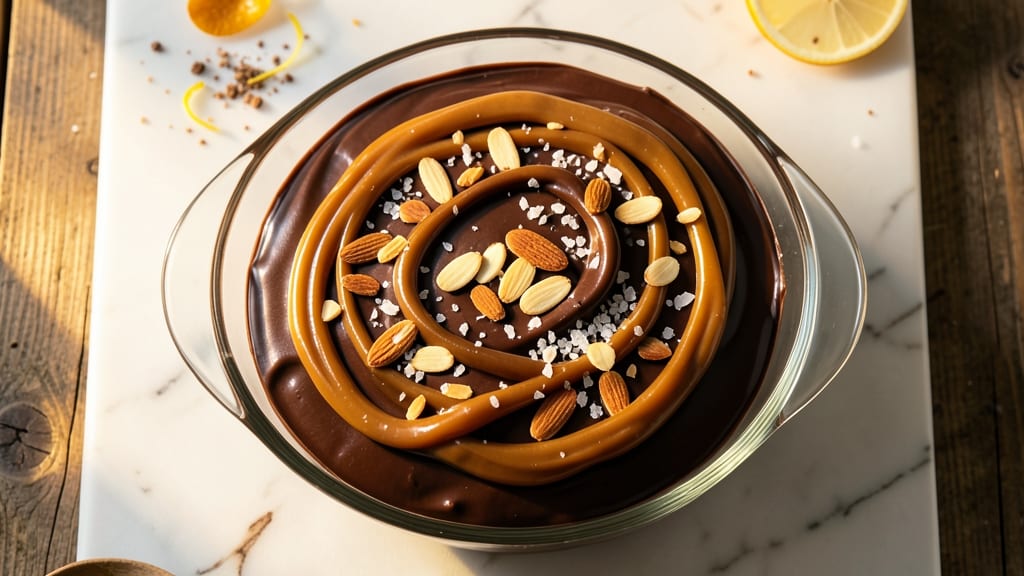
This caramel chocolate almond bark recipe delivers restaurant-quality sweetness with just five minutes of hands-on time and zero baking skills required. The magic lies in layering rich caramel, velvety chocolate, and toasted almonds into a single, shatterable slab that melts in your mouth. I developed this recipe after years of testing—it’s the perfect balance of textures and flavors that never fails to impress, whether you’re gifting it or indulging yourself.
The secret to success is patience during the setting process, which allows the caramel and chocolate to create a glossy, crackly surface while keeping the interior rich and fudgy.
You’ll need just four simple ingredients—chocolate, caramel, almonds, and a pinch of salt—but the result is a dessert that tastes like a gourmet treat. No oven, no fuss, and no waiting for it to cool too long before breaking into pieces.
What you’ll end up with is a slab of sweet, crunchy, and creamy perfection that’s impossible to resist. The caramel adds a buttery richness, the chocolate provides deep cocoa satisfaction, and the almonds contribute a satisfying crunch.
It’s the kind of dessert that disappears quickly, so make sure to portion it out before it’s gone.
This recipe is incredibly versatile—add sea salt for a sophisticated touch, swap almonds for pecans or walnuts, or even mix in a dash of cinnamon for warmth. Store it in the fridge for up to two weeks, though I doubt it will last that long. Let’s make this decadent treat!
Ingredients for caramel chocolate almond bark
Four key ingredients transform into restaurant-style sweetness with zero baking skills.
| Ingredient | Amount | Notes |
|---|---|---|
| Dark Chocolate Bars 🍫 | 12 oz | Semisweet or bittersweet, 60% cocoa |
| Store-Bought Caramel Sauce 🍯 | 1 cup | High-quality, salted variety |
| Sliced Almonds 🥜 | 1 ½ cups | Toasted, unsalted preferred |
| Flaky Sea Salt 🧂 | 1 tbsp | For finishing touch |
| Unsalted Butter 🧈 | 2 tbsp | For extra shine |
| Granulated Sugar 🍚 | 1 tbsp | Optional for extra crunch |
The chocolate makes or breaks this—Ghirardelli or Lindt bars melt perfectly and deliver that velvety texture. I always grab the 60% cocoa variety at Trader Joe's or Whole Foods because it's rich but not too bitter. The caramel? Smucker's or Brachs are my go-tos—the salted kind adds that perfect balance. Toast your almonds yourself (pan or oven, 5 minutes at 350°F) for maximum crunch. Costco sells them in bulk if you're making this often.
No dark chocolate? Milk chocolate works in a pinch—just know it'll be sweeter. Caramel sauce too thick? Microwave 10 seconds with 1 tsp water. Skip the almonds? Pecans or walnuts add different textures. Want extra crunch? Toss in crushed pretzels or freeze-dried strawberries. The butter and sugar combo at the end is optional but gives that glossy, candy-like finish—don't skip the butter if you want that professional look.
This sets best in the fridge—2-3 hours for a perfect crackly top. Store in an airtight container with parchment between layers for up to 2 weeks. I portion mine into squares right away because it disappears fast. For gifting, wrap individual pieces in clear cellophane with a ribbon. The flavor actually improves after 24 hours—the caramel and chocolate meld beautifully.
Why You'll Love This Recipe
- Five-Ingredient Magic: I swear, this is the kind of recipe where you glance at your pantry and think, "I already have all this?" Dark chocolate, caramel, almonds—it’s like the universe handed you a shortcut to something that tastes way fancier than it is.
- Salted Caramel Bliss: That moment when the first bite hits—rich chocolate, gooey caramel, and a pinch of flaky salt? It’s ridiculously addictive. Honestly, I’ve caught myself sneaking pieces straight from the pan when I’m supposed to be testing the texture.
- Party in a Box: Make a big batch once, and suddenly you’ve got gifts for holidays, hostess presents, or just a stash to pull out when you need to impress. Between us, my coworkers still talk about the "mysterious bark" I brought to the office last December.
- Zero-Waste Luxury: You’ll have leftovers, and that’s the point. The chocolate stays fresh for weeks if you store it right, and the cost per serving is a fraction of what you’d pay for store-bought treats. Plus, the butter and salt stretch your budget without sacrificing flavor.
Step-by-step instructions for caramel chocolate almond bark
Here's how to create this dreamy, crunchy-sweet treat without any fuss.
Melt the Chocolate and Butter Together
Break the 12 oz dark chocolate bars into small pieces and place them in a microwave-safe bowl. Add the 2 tbsp unsalted butter and microwave in 20-second bursts, stirring between each interval, until completely melted and smooth. You're aiming for a glossy, silky texture—like liquid velvet. If you prefer stovetop melting, use a double boiler over simmering water, stirring constantly until fully combined. The chocolate should reach about 110°F—just warm enough to flow but not so hot it loses its snap when set.
Here's the thing—I always melt the butter with the chocolate first. This prevents any potential burning from the butter's higher melting point and creates a richer base for the bark. If the mixture looks grainy, give it a quick stir with a silicone spatula to restore that silky consistency.
Stir in the Caramel Sauce
Remove the melted chocolate mixture from heat and let it cool slightly for 1-2 minutes—just enough to take the edge off but still warm to the touch. Then, gently fold in the 1 cup store-bought caramel sauce using a rubber spatula. Work quickly but carefully to maintain the chocolate's temperature while incorporating the caramel evenly. You want ribbons of caramel swirling through the chocolate, not clumps.
This is where the magic happens—the caramel's saltiness balances the chocolate's bitterness while adding that luscious gooey texture. If the mixture starts to thicken too much, you can warm it briefly (10 seconds in the microwave) to restore its flow. The ideal consistency should be like thick pudding—spreadable but not runny.
Fold in the Almonds and Sugar
Add the 1.5 cups sliced almonds and 1 tbsp granulated sugar (if using) to the chocolate-caramel mixture. Using the rubber spatula, gently fold everything together until the almonds are evenly distributed. The sugar, if using, will create little pockets of crunch throughout the bark. Don't overmix—just enough to coat the almonds lightly with the chocolate. You'll see some almonds with thick chocolate clinging to them, and that's perfect.
I like to press the almonds into the mixture rather than just stirring, which helps them adhere better to the chocolate. This ensures every bite has that satisfying crunch. If you're not using sugar, the almonds will still provide plenty of texture, but the sugar adds an extra dimension of sweetness and crunch.
Spread and Set the Bark
Line a 12x17-inch baking sheet with parchment paper, leaving a little overhang on the sides for easy removal. Quickly spread the chocolate mixture evenly across the parchment, using the back of a spoon or a spatula to create a thin, even layer. You want it about ¼-inch thick—thick enough to hold its shape but thin enough to set properly. Tap the baking sheet gently on the counter a few times to remove any air bubbles.
Let the bark cool at room temperature for 20-30 minutes until it's firm to the touch but still slightly soft in the center. This prevents cracking when you try to cut it later. The edges will set first, and you'll notice the surface develop a matte finish—this is your signal that it's ready for the final touch.
Finish with Salt and Cut into Squares
Once the bark is set but still pliable, sprinkle the 1 tbsp flaky sea salt evenly over the top. Press it down gently so it adheres to the surface. The salt will melt slightly into the chocolate, creating little pockets of intense flavor that contrast beautifully with the sweetness. Let the bark cool completely for another 10-15 minutes until it's firm enough to handle.
Use the parchment overhang to lift the bark onto your cutting board. Cut it into 1-inch squares using a sharp knife or pizza cutter. For cleaner cuts, dip the knife in hot water, wipe it dry, and press straight down through the bark. Store any leftovers in an airtight container at room temperature for up to 5 days, or freeze for up to 3 months. Each piece should have that perfect balance of rich chocolate, salty caramel, and nutty crunch—pure indulgence in every bite!
Pro Tips For Making Caramel Chocolate Almond Bark
- MELT CHOCOLATE SLOW: I learned this the hard way—dumping chopped chocolate into hot caramel turns it grainy. Instead, melt the chocolate in a double boiler (or microwave in 20-second bursts) until it’s smooth, then gently fold in the caramel. This keeps the texture silky, not streaky.
- CHOP CHOCOLATE EVENLY: Uneven chocolate chunks mean uneven melting. Use a sharp knife or food processor to chop the dark chocolate into small, uniform pieces—about the size of a pea. This ensures everything melts at the same time and the bark sets evenly.
- SALT BEFORE IT SETS: Sprinkle the flaky sea salt as soon as the mixture hits the parchment—before it starts to firm up. Press it in lightly so it sticks. If you wait, the salt just sits on top like a sad afterthought.
- BUTTER MATTERS MORE: Skip the store-bought caramel shortcut and make your own with butter, sugar, and cream—it’s richer and less likely to seize. Use unsalted butter (about 2 tablespoons) and melt it into the caramel first. This makes the whole bark taste deeper, not cloyingly sweet.
Troubleshooting perfect results
Grainy Chocolate Fix
If your melted chocolate looks grainy after melting, don’t panic—this happens when chocolate cools too quickly or has sugar crystals. The fix? Gently reheat the mixture in 10-second bursts in the microwave while stirring vigorously with a silicone spatula.
For extra insurance, place a clean, dry bowl over simmering water (double boiler) and stir constantly until smooth. I’ve found that Ghirardelli chocolate melts more smoothly than some store brands, so if you’re using budget chocolate, expect to do this extra step. 💫
Caramel Too Thick?
Store-bought caramel sauce can thicken when mixed with melted chocolate, making spreading difficult. If this happens, add ½ teaspoon of heavy cream or milk and stir gently to restore the right consistency.
For a quicker fix, microwave the mixture for 5-8 seconds to thin it out. Pro tip: Always use caramel sauce at room temperature—cold caramel will thicken the chocolate mixture even more. 🌡️
Almonds Not Sticking?
If your almonds aren’t adhering to the chocolate, they might be too dry or the mixture too cool. First, ensure your almonds are toasted (freshly toasted works best). Then, press them firmly into the chocolate mixture rather than just stirring—this helps them embed better.
If the chocolate has cooled too much, warm it slightly (10 seconds in the microwave) before folding in the almonds. I’ve also had success lightly coating the almonds in a tiny bit of melted butter before adding them to the mix. 🥜
Cracked or Broken Bark
Cracking usually happens when the bark cools too quickly or isn’t spread evenly. To prevent this, spread the mixture in a ¼-inch thick layer and let it cool at room temperature for 20-30 minutes before refrigerating. If cracks already appear, don’t worry—they just mean your bark is extra crispy!
For a smoother finish, chill the bark in the fridge for 1 hour before cutting. If it still cracks, try spreading it on a silicone baking mat instead of parchment for better flexibility. ⚡
Salt Not Adhering
Flaky sea salt should melt slightly into the chocolate, but if it just sits on top, your bark isn’t set enough. Let it cool for an extra 5-10 minutes until it’s firm to the touch before sprinkling the salt.
For a stronger bond, press the salt gently with the back of a spoon. If you’re in a hurry, place the baking sheet in the fridge for 10 minutes before adding the salt.
I’ve also found that Maldon sea salt adheres better than generic brands due to its larger, flakier texture. 🧂
Sticky or Gummy Texture
A gummy texture usually means the chocolate didn’t set properly, often due to humidity or not enough cooling time. To fix this, place the bark in the fridge for 30 minutes before cutting.
If it’s still sticky, try reheating the chocolate mixture slightly (10 seconds) to restore its snap. For future batches, chill the bark in the freezer for 15 minutes before cutting—this ensures a clean break every time.
Store-bought caramel can also contribute to stickiness, so opt for high-quality brands like Brach’s or Smucker’s for better results. 💡
Nutrition facts
Frequently asked questions
Can I make this without a microwave?
Use a double boiler by placing a heatproof bowl over a pot of simmering water. Melt the 12 oz chocolate and 2 tbsp butter together, stirring constantly until smooth. Keep the temperature below 110°F to prevent overheating. The stovetop method gives you more control over the heat, which is great for larger batches or when you're new to melting chocolate.
What if I don't have sliced almonds?
No problem! Swap them for pecans, walnuts, or even crushed pistachios for different textures. For extra crunch, try freeze-dried strawberries or pretzel pieces. Just toast your nuts first (5 minutes at 350°F) to enhance their flavor. If you're feeling adventurous, omit them entirely—it'll still taste amazing with just the chocolate and caramel layers.
How do I store leftovers to keep them fresh?
Store in an airtight container at room temperature for up to 5 days or freeze for 3 months. For longer freshness, place parchment paper between layers. The bark actually improves with time as the flavors meld! If it softens in humidity, pop it in the fridge for 30 minutes before serving.
Can I make this with white chocolate?
Technically yes, but it won't have the same rich depth. White chocolate melts differently and lacks the cocoa intensity that balances the caramel. For best results, stick with 60% dark chocolate—it's the perfect sweetness level that pairs beautifully with the salty caramel and nuts. If you must use white, add an extra 1 tbsp cocoa powder to deepen the flavor.
Why does my bark keep cracking?
Cracking happens when the bark cools too quickly or isn't spread evenly. For a smoother finish, spread it in a ¼-inch thick layer and let it cool at room temperature for 20-30 minutes before refrigerating. If cracks appear, don't worry—they just mean your bark is extra crispy! For next time, try spreading on a silicone baking mat instead of parchment for better flexibility.