
Desserts
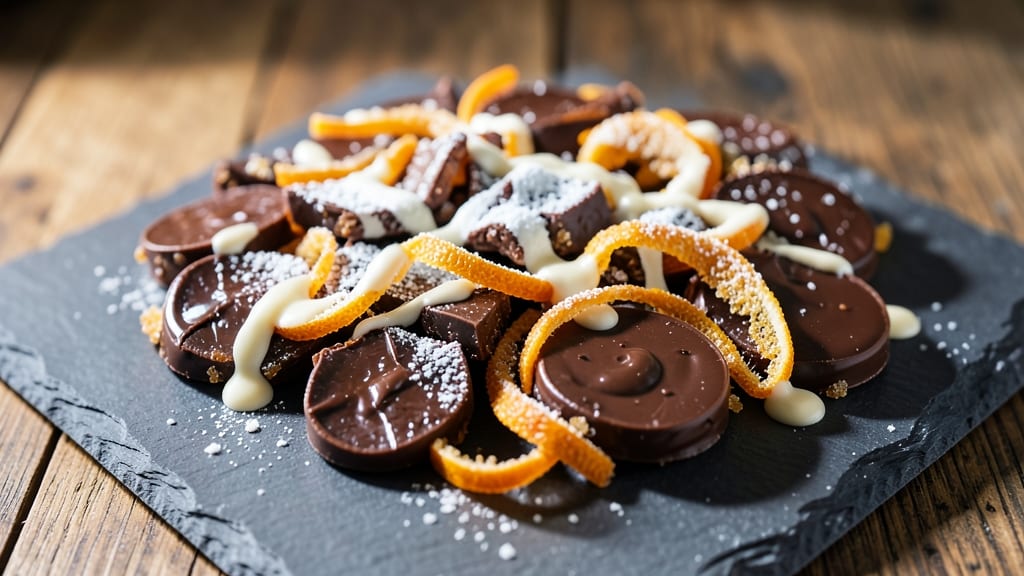
This candied chocolate orange recipe transforms humble citrus into a luxurious dessert that balances sweet, tangy, and rich flavors in every bite. The process begins with thinly sliced oranges simmered in sugar until tender and glossy, then dipped in velvety dark chocolate for a decadent finish.
What makes this recipe special is the perfect harmony between the bright citrus and deep chocolate—no artificial flavors, just pure, elevated simplicity.
The technique is straightforward yet precise: candying the oranges at a controlled simmer ensures they remain tender without dissolving, while tempering the chocolate guarantees a smooth, crack-free coating. This dessert requires just a few key ingredients—high-quality chocolate, fresh oranges, and a touch of patience—but delivers restaurant-quality results that taste homemade.
The contrast of textures—crispy orange peel, creamy chocolate, and glossy sugar—elevates even the simplest presentation.
By the time you’re done, you’ll have a dessert that’s as visually stunning as it is delicious: glossy chocolate-dipped orange slices arranged on a platter, their edges crisp and their centers juicy.
The aroma alone will draw everyone to the table, and the first bite delivers that perfect balance of citrus zing and chocolate depth. This recipe is ideal for holidays, dinner parties, or a special treat to impress guests without spending hours in the kitchen.
Store the candied oranges in an airtight container in the refrigerator, where the chocolate will stay firm and the oranges will retain their freshness for up to a week.
For an extra touch, dust with powdered sugar or crushed nuts before serving—simple details that make all the difference. Let’s get started on this showstopping dessert.
Ingredients for candied chocolate orange
Fresh oranges and quality chocolate create this elegant dessert with minimal ingredients.
| Ingredient | Amount | Notes |
|---|---|---|
| Navel Oranges 🍊 | 1 ½ lb | Organic preferred, thick-skinned |
| Granulated Sugar 🍚 | 2 cups | White or raw cane sugar |
| Water 💧 | 1 ½ cups | Filtered preferred |
| Dark Chocolate Bars 🍫 | 8 oz | 70% cocoa, high-quality |
| Unsalted Butter 🧈 | 1 tbsp | For chocolate tempering |
| Powdered Sugar 🍚 | ¼ cup | For dusting, optional |
| Vanilla Extract 🌿 | ½ tsp | Pure vanilla preferred |
| Sea Salt 🧂 | ¼ tsp | Fine grain, for finishing |
| Cornstarch 🌾 | 1 tbsp | For preventing sticking |
The oranges are the foundation—navel oranges work best thanks to their thick peels and low seeds. Organic options from Whole Foods or local markets have fewer pesticides and brighter flavor. For the chocolate, Valrhona or Lindt 70% bars are my go-to, but any high-quality dark chocolate with at least 70% cocoa will work. The sugar should be fine granulated—Domino brand is reliable and affordable. If you're using conventional oranges, give them a good rinse before slicing to remove any wax coating.
No vanilla extract? Almond extract at half the amount works in a pinch, though vanilla's floral notes are ideal. Short on dark chocolate? Mix equal parts dark and semi-sweet chocolate chips for a sweeter balance. The butter is crucial for tempering—use unsalted to avoid flavor interference. For the powdered sugar, Confectioners' sugar from a sealed container prevents clumping. If your chocolate has a high cocoa content, you might want to add an extra 0.5 oz of butter during tempering to ensure smoothness. The cornstarch is optional but helps prevent the orange slices from sticking during the candying process.
Store the finished candied oranges in an airtight container in the fridge, where they'll keep for up to 7 days. The chocolate stays firm at room temperature for about 2 days, but refrigeration extends that to 4-5 days. For longer storage, freeze the chocolate-dipped oranges for up to 2 months. Let them sit at room temperature for 10-15 minutes before serving to soften the chocolate slightly—this makes them easier to handle and more enjoyable to eat. The contrast of textures is what makes this dessert special, so avoid overhandling the chocolate once it's set.
Why You'll Love This Recipe
- Two-Ingredient Magic: I swear by this trick—just peel those oranges, toss them in simmering sugar water, and let the citrus melt into caramel. No fancy techniques, no stress, just 15 minutes of hands-off magic while the kitchen smells like a holiday.
- Sweet-Savory Crunch: That first bite? The bright orange peel cuts through the rich dark chocolate like a citrusy knife through butter. Honestly, it’s the kind of contrast that makes you reach for seconds without even thinking—no guilt, just pure satisfaction.
- Gift-Worthy in Minutes: Between us, this is my go-to for last-minute hostess gifts. Wrap a few pieces in cellophane, tie a ribbon, and boom—you’ve just saved $20 on store-bought chocolates. (Yes, even on a Tuesday night.)
- Budget Luxury: Dark chocolate and oranges are already affordable, but this recipe stretches them further—make a double batch, store the extras in the fridge, and snack for days. I’ve had these last a week in my house, and no one’s complained.
Step-by-step instructions for candied chocolate orange
Here's how to perfectly balance sweet citrus with rich chocolate for a decadent treat.
Prepare and Simmer the Orange Peel
Start by peeling the 1.5 lb Navel Oranges, working in one continuous strip from top to bottom of each orange. Avoid the pith—it's bitter. Cut the peel into ¼-inch-wide strips, then slice each strip crosswise into ½-inch pieces. You should have about 4 cups of peel.
In a medium saucepan, combine the orange peel with the 2 cups Granulated Sugar and the 1.5 cups Water. Bring to a boil over medium-high heat, stirring until the sugar dissolves completely. Reduce heat to medium-low and let it simmer gently for 30 minutes, stirring occasionally. The peel should become tender and translucent, and the liquid should reduce to about ½ cup. This step extracts the natural oils from the peel while creating a syrupy base.
Temper the Chocolate
While the orange peel simmers, chop the 8 oz Dark Chocolate Bars into small, even pieces. In a heatproof bowl set over a pot of simmering water (double boiler), melt the chocolate and the 1 tbsp Unsalted Butter together, stirring gently until completely smooth. Remove from heat and let it cool to 110°F—just until it's thick enough to hold its shape when drizzled but still pourable. This tempering process ensures the chocolate sets properly without streaks.
I use a candy thermometer to monitor the temperature precisely. If the chocolate cools too quickly, place the bowl back over the simmering water for 10-15 seconds to bring it back to temperature. The goal is to create a glossy, stable chocolate that will coat the oranges beautifully.
Coat the Oranges in Chocolate
Once the orange peel is tender and the chocolate is tempered, drain the peel in a colander, reserving the syrup. Working quickly, toss the warm peel with 1 tbsp Cornstarch to prevent sticking. Then, transfer the peel to a large bowl and pour the melted chocolate over it, tossing gently with tongs until each piece is fully coated. The chocolate should cling smoothly without dripping.
Spread the coated peel on a parchment-lined baking sheet, spacing the pieces about 1 inch apart. Place in the refrigerator to set for 15 minutes. The cornstarch prevents the chocolate from sticking to itself while the cold temperature helps it solidify quickly. If any pieces stick together, gently separate them with a spatula.
Finish with Vanilla and Salt
In a small bowl, whisk together the 0.25 cup Powdered Sugar, 0.5 tsp Vanilla Extract, and 0.25 tsp Sea Salt. Once the chocolate is set, transfer the candied oranges to a serving dish and lightly dust them with this mixture. The powdered sugar adds a delicate sweetness, the vanilla enhances the citrus notes, and the sea salt cuts through the richness for a balanced flavor.
Let the candied oranges sit at room temperature for 10 minutes before serving to allow the flavors to meld. Store any leftovers in an airtight container in the refrigerator for up to 5 days, though they're best enjoyed fresh. These candies pair beautifully with a glass of sparkling wine or as a luxurious garnish for desserts.
Pro Tips For Making Candied Chocolate Orange
- Peel Oranges Thinly: Use a sharp paring knife—don’t just hack at it like I did the first five times. A thin, even peel (about 1/8-inch) lets the sugar syrup work its magic without turning your oranges into chewy rubber. And skip the white pith; it’s bitter and ruins the clean citrus flavor.
- Simmer Sugar Slowly: Bring the sugar-water mix to a gentle boil first, then reduce to a low simmer. I learned this the hard way—rushing it makes the syrup grainy, and you’ll end up with sticky, uneven candy instead of glossy, melt-in-your-mouth slices. Five minutes at a low simmer does the trick.
- Melt Chocolate Gently: Chop the dark chocolate into small chunks and melt it in a heatproof bowl over barely simmering water (double boiler). If you microwave it or use high heat, it’ll seize and turn grainy—trust me, I’ve turned a perfectly good batch into chocolate grits. Stir occasionally and keep it under 110°F (43°C).
- Drain Oranges Well: After the sugar bath, drain the oranges on a wire rack—not paper towels. The paper absorbs too much sugar, leaving them dry and cloying. A rack lets excess syrup drip off while keeping the slices plump. (Yes, even if you’re impatient like me.)
Common mistakes when making this dish
Over-Simmering the Peel
One of the biggest mistakes is letting the orange peel simmer too long, which turns it mushy and loses its natural texture. I’ve seen this happen when the heat isn’t reduced properly after boiling—keep the temperature at a gentle simmer (medium-low heat) for exactly 30 minutes.
If the peel looks translucent but still holds its shape, it’s perfect. Overcooking releases too much pectin, making the slices dissolve in your mouth instead of offering that satisfying chew. 🍊
Skipping the Tempering
Mistaking melted chocolate for tempered chocolate is a game-changer for texture. Untempered chocolate sets dull and streaky, while tempered chocolate has that glossy, snappy finish we all love. Use a candy thermometer to hit 110°F—this ensures the chocolate will set smoothly on the oranges.
If you rush this step, your candied oranges will look like they’ve been dipped in mud. Pro tip: If your kitchen isn’t cool enough, place the bowl of chocolate in the fridge for 5 minutes to speed up cooling.
Uneven Chocolate Coating
Tossing the orange peel in chocolate too quickly or not coating it evenly leads to lumpy, uneven results. Work in batches if needed, and use tongs to gently turn each piece until fully coated.
I’ve learned the hard way—if you rush, some slices will be naked while others are drowning in chocolate. Another trick: Dust the peel with 1 tbsp cornstarch before coating to prevent sticking, which also helps the chocolate adhere more evenly. 🍫
Ignoring the Syrup
The reduced orange syrup is more than just a byproduct—it’s flavor gold! Don’t pour it down the drain. Reserve it and drizzle it over the finished candied oranges for extra shine and citrus depth.
I’ve used it to glaze cakes or even as a simple syrup for cocktails. If you discard it, you’re missing out on that bright, tangy finish that ties the whole dessert together.
Not Letting the Chocolate Set Properly
Placing the coated oranges in the fridge for only 10 minutes (instead of the full 15 minutes) means they’ll still be sticky when you try to serve them. Patience here is key—the extra 5 minutes ensures the chocolate firms up without cracking.
If you’re in a hurry, chill them for 10 minutes first, then finish setting at room temperature for 5 minutes. This two-step approach works in a pinch.
Overhandling the Finished Product
Once the chocolate is set, resist the urge to move the oranges around too much. Excess handling causes the chocolate to melt and stick together, ruining the presentation. Serve them directly from the baking sheet or transfer them gently with a spatula.
If you need to store them, place parchment paper between layers in an airtight container to prevent sticking. The goal is to keep that perfect glossy finish intact. ✨
Nutrition facts
Frequently asked questions
Can I use other citrus fruits instead of oranges?
Grapefruit or lemon peels work beautifully, though the flavor profile changes. For grapefruit, reduce the simmering time to 20 minutes—it's more delicate than orange peel. Lemon peels have a stronger aroma, so use 1 tsp lemon extract in the finishing powdered sugar mix to enhance the citrus notes. Avoid bitter citrus like lime or bitter orange unless you're targeting a specific flavor profile.
How do I fix chocolate that's too thick or too thin during tempering?
If your chocolate is too thick, place the bowl over simmering water for 10-15 seconds to thin it slightly. For chocolate that's too thin, chill it in the fridge for 2-3 minutes to thicken. Always aim for a temperature of 110°F—this is your sweet spot for perfect tempering. If you're unsure, use a candy thermometer to monitor the progress precisely.
Can I make this recipe without a candy thermometer?
Yes, but it requires patience! Test the chocolate by dropping a small amount onto a chilled plate. If it sets in 3-5 minutes with a glossy finish, it's ready. If it stays sticky, reheat gently. For tempering without a thermometer, melt the chocolate, then cool it to 90°F, reheat to 105°F, and cool again to 88°F. This three-step process mimics tempering.
How can I make these candied oranges last longer?
Store them in an airtight container in the fridge for up to 7 days. For longer storage, freeze them for 2 months. When ready to eat, let them sit at room temperature for 10-15 minutes to soften the chocolate slightly. To prevent sticking, place parchment paper between layers. The chocolate will stay firm in the fridge, but bring it to room temp before serving for the best texture.
What's the best way to present these for a special occasion?
Arrange the candied oranges on a platter with a dusting of powdered sugar and a sprinkle of sea salt for a sophisticated look. For an elegant touch, add fresh mint leaves or edible flowers. Serve on a marble slab or wooden board for contrast. Pair with a glass of sparkling wine or a dark rum cocktail to complement the citrus and chocolate flavors. The presentation should highlight the glossy chocolate and vibrant orange peels.