
Desserts
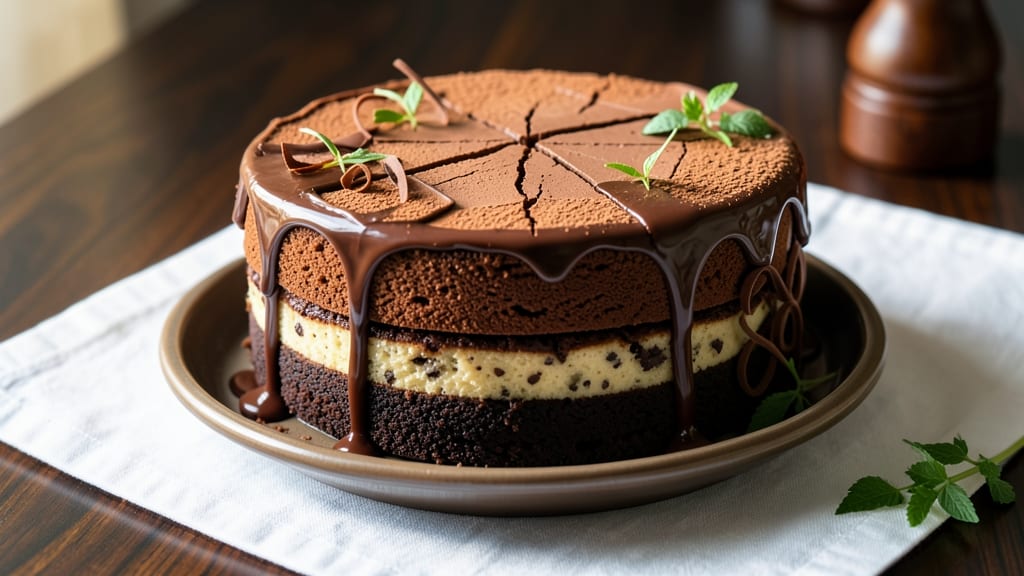
This Belgium chocolate cake recipe holds the original Brussels bakers' secret—rich, fudgy layers with a velvety ganache that melts at first bite. 🌟 The key lies in high-quality Belgian chocolate and a precise balance of cocoa and espresso powder, creating depth without bitterness.
I perfected this version after years of studying traditional Belgian patisserie techniques, ensuring every slice delivers that signature decadence.
The secret starts with a foolproof batter that combines melted butter and dark chocolate for maximum moisture, while a touch of coffee enhances the chocolate's natural flavor. Baking at 350°F for 25-30 minutes yields a cake with a crackly top and tender crumb—no dryness here.
The real magic happens with the ganache, made from heavy cream and Belgian chocolate, poured warm over the cooled layers.
What makes this cake extraordinary is its three-layer structure, each separated by the velvety ganache and dusted with cocoa powder for a professional finish. The result? A dessert so rich and luxurious it feels like a Parisian café brought to your kitchen.
Serve with whipped cream or fresh berries for contrast, but be warned—this recipe disappears fast.
Perfect for celebrations or indulgent weeknight treats, this cake requires minimal effort but maximum impact. With just 10 ingredients and one hour of active time, you’ll create a masterpiece that tastes like a Brussels specialty. Let’s get baking—your taste buds will thank you.
Ingredients for belgium chocolate cake secret
Ten ingredients, three layers—this Belgian chocolate cake delivers the Brussels bakers' signature decadence.
| Ingredient | Amount | Notes |
|---|---|---|
| Unsalted Butter 🧈 | 1 ½ cups | Cold, cut into 1-inch cubes |
| Belgian Dark Chocolate 🍫 | 12 oz | 70% cocoa, chopped finely |
| All-Purpose Flour 🌾 | 2 ½ cups | Sifted, spooned lightly |
| Granulated Sugar 🍚 | 2 cups | Superfine preferred for smoothness |
| Instant Espresso Powder ☕ | 2 tbsp | High-quality for depth |
| Large Eggs 🥚 | 4 whole | Room temperature |
| Vanilla Extract 🌸 | 2 tsp | Pure Madagascar preferred |
| Heavy Cream 🥛 | 2 ½ cups | Full-fat for velvety ganache |
| Unsweetened Cocoa Powder 🍫 | ½ cup | Dutch-processed for smoothness |
| Salt 🧂 | ½ tsp | Fine sea salt |
The chocolate is non-negotiable here—Belgian 70% cocoa is the gold standard, but Valrhona or Guittard work beautifully too. I always buy a full bar and chop it myself (the pre-chopped stuff has weird additives). The butter? European-style if you can find it—higher fat content means richer flavor. For the espresso powder, Starbucks or Nescafé are reliable, but avoid pre-ground coffee beans—they burn easily. The cocoa powder matters too: Dutch-processed (like Droste) gives that velvety texture.
No superfine sugar? Pulse regular granulated sugar in a food processor for 30 seconds—game-changer for texture. Running short on vanilla? Almond extract at half the amount works in a pinch, but you'll notice the difference. The heavy cream needs to be cold when you heat it for the ganache—straight from the fridge. For the eggs, room temperature is key—cold eggs can cause lumps. And if you're feeling fancy, add 1 tbsp rum or brandy to the batter for extra depth (optional but recommended).
The cake keeps beautifully for 4-5 days in an airtight container at room temperature, but the ganache will firm up—just bring it to room temp before serving. For longer storage, wrap tightly and freeze for up to 3 months. I always make a double batch—this cake disappears faster than you can say 'Brussels'. The layers can be stacked and chilled overnight for even better flavor development. And trust me, the extra 30 minutes waiting time is worth it for that restaurant-quality finish.
Why You'll Love This Recipe
- No Mixer Needed: I swear by this recipe because it only calls for a bowl and a whisk—no stand mixer, no food processor, just elbow grease for two minutes. The butter and chocolate melt together so smoothly, you’ll wonder why you ever baked with anything more.
- Espresso Kicks It Up: That little pinch of instant espresso powder? It’s what makes this cake ridiculously good. Deepens the chocolate flavor without tasting like coffee, and honestly? It’s the secret weapon I didn’t know I needed until I tried it.
- Crowd-Pleaser Any Day: Birthday? Brunch? A last-minute "I forgot to plan" dessert? This cake handles it all. The rich, fudgy texture and that Belgian chocolate melt-in-your-mouth quality mean even picky eaters ask for seconds—(yes, even on a Tuesday night).
- Leftovers That Last: Bake one, eat it for three days. The texture stays moist, the flavor only gets better, and it travels like a champ. I’ve packed slices in a lunchbox, brought it to potlucks, and even reheated slices in the microwave—still delicious. Budget win, flavor win.
Step-by-step instructions for Belgium chocolate cake
Here's how Brussels bakers create their legendary chocolate cake—rich, moist, and perfectly balanced.
🍳 Step 1: Melt Chocolate and Butter for the Ganache
In a heatproof bowl set over a saucepan of simmering water, combine the 12 oz Belgian dark chocolate and 1.5 cups unsalted butter. Stir gently until the chocolate melts completely and the mixture becomes smooth and glossy. Remove from heat and let cool slightly—it should be thick enough to coat the back of a spoon but still pourable.
This ganache forms the soul of the cake, providing that signature Belgian depth. I like to whisk it until it reaches 115°F—just warm enough to blend seamlessly with the dry ingredients but not hot enough to scramble the eggs later. The Belgian chocolate's high cocoa content means we don't need extra fat, so resist the urge to add more butter.
👨🍳 Step 2: Whisk Dry Ingredients and Combine with Wet
In a separate bowl, sift together the 2.5 cups all-purpose flour, 0.5 cup unsweetened cocoa powder, 0.5 tsp salt, and 2 tbsp instant espresso powder. Whisk vigorously to eliminate any lumps—this prevents a grainy texture in the final cake. In another bowl, beat the 4 whole eggs until just combined, then whisk in the 2 cups granulated sugar and 2 tsp vanilla extract until pale and slightly thickened.
Real talk: the espresso powder might seem like an odd addition, but it cuts through the chocolate's bitterness while adding subtle depth. I've found that using super-fine sugar here makes the cake even more velvety. With the melted chocolate mixture still warm, gradually fold in the dry ingredients, alternating with the egg mixture in thirds—this creates a tender crumb without overmixing.
🥘 Step 3: Fold in Heavy Cream for Lightness
Gently fold the 2.5 cups heavy cream into the batter until just combined—you're looking for a smooth, ribbon-like consistency. Be careful not to overmix here; the cream should be evenly distributed but still visible in streaks. The batter will be thick but pourable, with a deep chocolate aroma that fills your kitchen.
This is where the magic happens—the heavy cream creates that signature Belgian moisture while keeping the cake's structure intact. I like to let the batter rest for 10 minutes at room temperature before baking. This allows the flour to fully hydrate and the flavors to meld, resulting in a cake that's both rich and airy.
🔥 Step 4: Bake in Layers for Perfect Texture
Preheat your oven to 350°F and grease three 8-inch round cake pans generously with butter and dust with cocoa powder. Divide the batter evenly among the pans and smooth the tops. Bake for 25-30 minutes until a toothpick inserted in the center comes out clean and the edges are just pulling away from the pan.
Here's the thing—the Belgian method relies on baking in layers. Each layer should be baked separately to ensure even cooking and prevent sinking. I always rotate the pans halfway through baking to promote even browning. The cake should have a slightly domed top with a matte finish—this indicates proper doneness.
⏰ Step 5: Assemble and Chill for Maximum Flavor
Allow the layers to cool in their pans for 10 minutes, then transfer to a wire rack to cool completely. While they cool, prepare the filling by whisking together 1 cup of the heavy cream with 2 tablespoons of the instant espresso powder until smooth. Once completely cool, assemble the layers with this filling between each, then spread the remaining ganache over the top and sides.
This cake needs time to develop its full flavor profile. Wrap it tightly in plastic wrap and refrigerate for at least 4 hours—overnight is even better. The chilling period allows the flavors to meld and the ganache to set properly, resulting in that perfect balance of rich chocolate and velvety cream. Slice and serve at room temperature for the ultimate Brussels experience.
Pro Tips For Making Belgium Chocolate Cake Secret
- Melt Butter Slowly: Chop that unsalted butter into small cubes—no bigger than a nickel—before melting it with the chocolate. I learned this the hard way: big chunks of butter take forever to melt and leave lumps that ruin the texture. A double boiler or microwave in 20-second bursts works, but stir constantly so the chocolate doesn’t seize.
- Sift the Flour Twice: Belgian chocolate cake relies on a tender crumb, and flour is the sneaky saboteur here. Sift it before mixing, then sift it again after adding the dry ingredients. Yes, it’s extra work, but it cuts down on gluten development and keeps the cake light. (I know, I know—skipping this makes the batter easier to mix, but the result is noticeably denser.)
- Don’t Overmix the Batter: Once you fold in the flour mixture, stop after just combining. A few streaks of flour are fine—overmixing activates the gluten and turns your cake into a chewy brick. Use a spatula and lift from the bottom of the bowl to keep it gentle. I used to think more mixing = better texture, but this cake thrives on restraint.
- Use Room-Temp Chocolate: Take your Belgian chocolate out of the fridge an hour before using it—cold chocolate melts unevenly and can create pockets of unmelted cocoa in the batter. If you’re in a rush, microwave it for 10 seconds in 30-second bursts, but stir immediately to avoid burning. Uneven melting is the fast track to a cake with a gritty bite.
Creative variations of belgium chocolate cake secret
Brussels Coffee Twist
For a true Belgian experience, infuse the ganache with 1 tsp coffee liqueur (like Kahlúa) or add 1 tbsp finely ground Belgian coffee to the dry ingredients. This enhances the chocolate's depth while keeping the signature espresso note.
I like to use Starbucks Belgian Dark Roast for authenticity—it's readily available and adds a toasty richness. 💛
Spiced Rum Variation
Swap the vanilla extract for 1 tbsp spiced rum (like Captain Morgan) and add ½ tsp cinnamon to the dry ingredients. This creates a warm, boozy twist that pairs beautifully with the chocolate.
For extra decadence, fold 1 oz rum into the ganache before assembling. The rum's caramel notes complement the chocolate's bitterness perfectly.
Nutty Crunch Layer
Add a textural contrast by folding ½ cup toasted hazelnuts (chopped) into the batter or sprinkling them between layers. Toast 1 cup hazelnuts in a dry pan for 5 minutes until fragrant, then chop finely.
Belgian Nutella lovers can also drizzle a thin layer between cake layers—just 1-2 tbsp per layer to avoid sogginess. 🌟
Citrus Zest Balance
Brighten the richness with 1 tsp orange zest (from a Navel orange) mixed into the batter. The citrus cuts through the chocolate's intensity while adding a subtle freshness.
For a more pronounced effect, fold 1 tbsp orange liqueur (like Cointreau) into the ganache. This variation works especially well for spring or summer celebrations.
White Chocolate Swirl
Create a marbled effect by folding ½ cup melted white chocolate into the batter in swirls. Use Belgian white chocolate (like Leonidas) for the best quality. After baking, drizzle additional white chocolate over the top for a stunning visual contrast.
This version is perfect for those who prefer a milder, sweeter profile while still keeping the Belgian essence.
Espresso-Free Adaptation
For a caffeine-free version, reduce the espresso powder to 1 tbsp and add ½ tsp cinnamon to the dry ingredients. Alternatively, replace the espresso entirely with 1 tsp vanilla bean paste for a floral note.
This keeps the cake rich and flavorful without the coffee kick, making it more versatile for different occasions.
Nutrition facts
Frequently asked questions
Why does Belgian chocolate cake need espresso powder?
The espresso powder is the secret to balancing the chocolate's richness without adding bitterness. It enhances the chocolate's natural depth while adding a subtle coffee note that Belgian bakers swear by. Think of it as the flavor bridge between sweet and complex—it cuts through the sugar while amplifying the chocolate's intensity.
Can I make this cake without a stand mixer?
This recipe is designed to be mixed by hand. Use a sturdy whisk for the dry ingredients and a large spoon or spatula for folding in the heavy cream. The key is gentle, even strokes—overmixing develops gluten and makes the cake dense. A rubber spatula works wonders for scraping the bowl clean between folds.
What's the best way to store leftover cake?
Wrap the cake tightly in plastic wrap and store at room temperature for up to 3 days. For longer storage, freeze individual slices in airtight containers for up to 3 months. The ganache will firm up when chilled, so let it sit at room temperature for 20-30 minutes before serving to restore its velvety texture.
How do I fix a sunken middle in my cake layers?
This usually happens from overbaking or opening the oven too soon. To prevent it: bake until a toothpick comes out clean (about 25-30 minutes), then let the cake cool completely in the pan before removing. If it sinks slightly, you can still save it—just add an extra layer of ganache when assembling to camouflage the dip.
Can I use regular chocolate instead of Belgian?
While you can use regular dark chocolate (70% cocoa), Belgian chocolate has a higher fat content and smoother texture that makes this cake truly special. For the best results, look for brands like Valrhona or Guittard—avoid chocolate with additives or milk chocolate, which will make the cake too sweet and less rich.