
Desserts
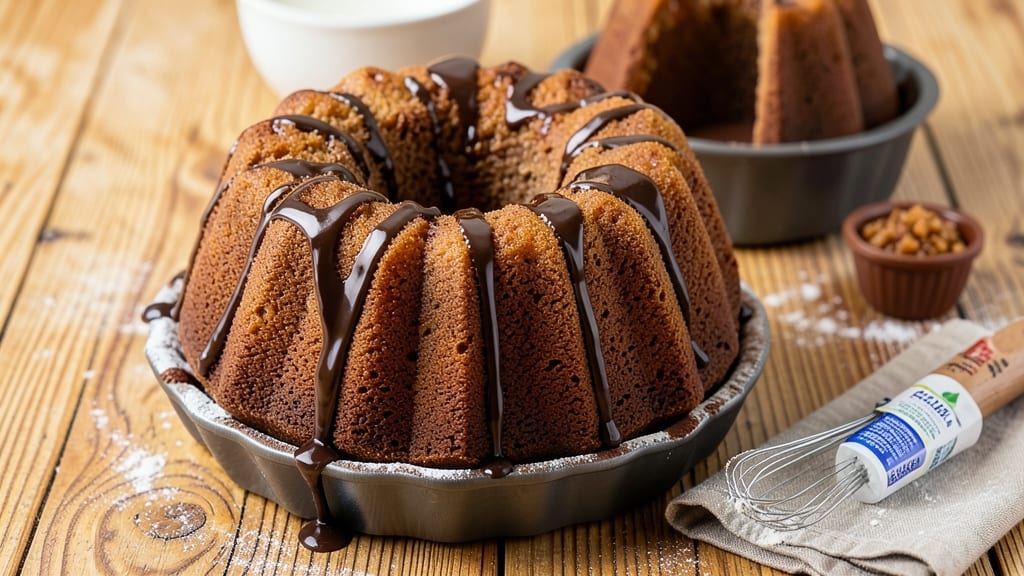
A basic chocolate bundt cake recipe delivers that perfect balance of fluffy layers and rich cocoa flavor—no fancy techniques required. This classic dessert comes together with simple ingredients and just 45 minutes of active time, making it ideal for beginners or last-minute celebrations.
The secret lies in proper pan preparation and a moist batter that stays tender even after cooling.
What sets this recipe apart is its foolproof method for achieving a golden rise with a fudgy interior. The bundt pan creates stunning ridges and peaks, while the cocoa powder ensures deep chocolate flavor without bitterness.
A light dusting of powdered sugar or a simple glaze elevates the presentation for any occasion.
By the time you pull it from the oven, you’ll have a cake that’s perfectly moist, not too dense, with a subtle crackle on top and edges that stay tender.
The aroma alone will have everyone gathering around the kitchen—no frosting needed, though a quick chocolate ganache adds a luxurious touch if desired.
Whether you’re baking for a birthday, holiday gathering, or just craving something sweet, this recipe delivers restaurant-quality results with minimal effort. Let’s get started with the simple steps to create your perfect bundt cake.
Ingredients for basic chocolate bundt cake
Fifteen simple ingredients create a moist chocolate bundt cake with golden rise and fudgy interior.
| Ingredient | Amount | Notes |
|---|---|---|
| All-Purpose Flour 🌾 | 2 cups | Sifted for light texture |
| Unsweetened Cocoa Powder 🍫 | ½ cup | Dutch-processed for smoothness |
| Granulated Sugar 🍚 | 1 ½ cups | White or light brown |
| Packed Brown Sugar 🍯 | ½ cup | Light or dark preferred |
| Baking Powder 🍞 | 2 tsp | Aluminum-free for best rise |
| Baking Soda 🧂 | ½ tsp | Pure, not baking powder |
| Salt 🧂 | ½ tsp | Diamond Crystal preferred |
| Instant Espresso Powder ☕ | 1 tbsp | Enhances chocolate depth |
| Vanilla Extract 🌸 | 2 tsp | Pure, high-quality preferred |
| Whole Milk 🥛 | 1 cup | Room temperature preferred |
| Vegetable Oil 🫒 | ½ cup | Light or canola preferred |
| Large Eggs 🥚 | 2 whole | Room temperature for best mixing |
| Powdered Sugar 🍚 | ½ cup | For dusting, optional |
| Bundt Cake Pan 🍰 | 1 whole | Nonstick, 10-12 cup capacity |
| Vegetable Oil Spray 🫒 | 2 tsp | For pan preparation |
The cocoa powder is non-negotiable—Dutch-processed gives the smoothest flavor without bitterness. Hershey's Special Dark or Valrhona are top-tier choices, but any high-quality brand works. The instant espresso powder might seem odd, but it deepens the chocolate flavor dramatically. For the sugars, Domino or C&H are reliable, but avoid clumpy brown sugar. The baking powder and soda should be fresh—test by mixing a little with water; if it fizzes vigorously, they're good. For the pan, a Wilton or Nordic Ware bundt pan ensures even baking and those signature ridges.
No cocoa powder? Melted dark chocolate (6 oz, 70% cocoa) can replace half the flour—whisk it into the wet ingredients first. Short on eggs? Flax eggs (2 tbsp ground flaxseed + 6 tbsp water per egg) work, though texture may differ slightly. The vegetable oil can be swapped for melted coconut oil, but it adds a subtle coconut note. For a richer cake, add 2 oz melted chocolate chips to the batter. The vanilla extract should be pure—McCormick or Nielsen-Massey are solid choices. If you're using a different bundt pan, check the capacity; this recipe assumes a 10-12 cup pan—adjust baking time if yours is larger.
Prep the pan first: spray with oil and dust with flour, tapping out excess—this ensures easy release. The batter should be thick but pourable; if it's too stiff, add 1-2 tbsp milk. Bake at 350°F (175°C) for 50-60 minutes, or until a toothpick inserted comes out clean. Let it cool in the pan for 10 minutes before inverting onto a wire rack. Store wrapped at room temperature for 2 days or refrigerated for 5 days. For longer storage, freeze the whole cake (unfrosted) for up to 3 months. Reheat slices at 300°F (150°C) for 10 seconds to restore moisture.
Why You'll Love This Recipe
- No Fussy Steps: Mixing this cake is just flour, cocoa, and sugar—no weird ratios or last-minute scrambling. The brown sugar keeps it moist without extra effort, and the bundt pan does all the work for that gorgeous shape.
- Rich Without Overdoing It: That cocoa powder delivers deep chocolate flavor, but the granulated sugar balances it so it’s not bitter or heavy. Honestly, it’s the kind of cake that tastes like a treat but won’t leave you in a sugar crash.
- Birthday or Breakfast: Slice it for a celebration or keep it whole for a lazy Sunday. The leftovers? Perfect for toast or a quick snack—just pop a piece in the toaster and watch it get crispy at the edges.
- Pantry Staples Only: No specialty ingredients mean this won’t break the bank. Between us, I’ve made this twice with the same flour and cocoa, and it’s still spot-on every time. Minimal cost, maximum satisfaction.
Step-by-step instructions for chocolate bundt cake
Master this technique and you'll achieve a perfectly moist center with a crackly crust every time.
Prepare the Bundt Pan and Mix Dry Ingredients
Preheat your oven to 350°F and position a rack in the center position. Lightly spray the bundt cake pan with the 2 teaspoons vegetable oil spray, then dust generously with all-purpose flour (about 1 tablespoon). Tap out any excess flour and set aside. This double-layer coating prevents sticking and ensures easy release.
In a medium bowl, sift together the 2 cups all-purpose flour, 2 teaspoons baking powder, ½ teaspoon baking soda, ½ teaspoon salt, ½ cup unsweetened cocoa powder, and 1 tablespoon instant espresso powder. Whisk until completely combined and no lumps remain. The espresso powder enhances chocolate flavor without adding bitterness, while the cocoa gives that signature depth.
Cream Wet Ingredients for Maximum Moisture
In a separate large bowl, combine the 1.5 cups granulated sugar and ½ cup packed brown sugar. Add the 2 whole large eggs and ½ cup vegetable oil, then beat with an electric mixer on medium speed for 3 minutes until light and fluffy. The mixture should nearly double in volume and become pale in color. This step incorporates air, which creates that signature fluffy rise.
Gradually add the 1 cup whole milk while continuing to mix on medium speed. Scrape down the sides of the bowl as needed. Stir in the 2 teaspoons vanilla extract until fully incorporated. The milk activates the baking powder and soda, while the vanilla adds aromatic complexity that balances the chocolate's intensity.
Combine Wet and Dry Ingredients Gently
With the mixer on low speed, gradually add the dry ingredients to the wet mixture. Mix just until combined—about 30 seconds—being careful not to overmix. The batter should be thick but pourable. Overmixing develops gluten and can result in a dense cake. If the batter appears too thick, add 1-2 tablespoons milk to reach proper consistency.
Pour the batter into the prepared bundt pan, tapping gently on the counter to remove any air bubbles. Fill the pan to the top—this ensures maximum rise and prevents a flat cake. The batter should come within ¼ inch of the rim. Place the pan on a baking sheet to catch any potential drips during baking.
Bake to Perfect Doneness
Bake for 50-60 minutes or until a toothpick inserted into the center comes out clean with a few moist crumbs clinging to it. The cake should be set but still slightly springy to the touch. Avoid overbaking, which can result in a dry cake. The top should be crackly and golden brown, while the sides should pull away slightly from the pan.
Immediately after removing from the oven, invert the cake onto a wire rack or serving plate. Let it cool completely before unmolding. This gradual cooling prevents the cake from cracking as it contracts. Once fully cooled, dust generously with ½ cup powdered sugar if desired, using a fine-mesh sieve for an even coating.
Serve and Store for Maximum Freshness
Slice the bundt cake with a sharp serrated knife, wiping the blade between cuts to ensure clean slices. Serve at room temperature for the best texture contrast—moist interior with a slightly crisp exterior. The cake keeps well at room temperature in an airtight container for 2 days or can be refrigerated for up to 1 week. For longer storage, freeze individual slices wrapped in plastic wrap for up to 3 months.
This cake achieves its signature fudgy texture through the combination of cocoa powder and brown sugar, while the espresso powder adds depth without bitterness. The high-fat content from the oil and eggs ensures moisture retention, resulting in that perfect balance of rich chocolate flavor and tender crumb.
Pro Tips For Making Basic Chocolate Bundt Cake
- Mix Dry Ingredients First: I learned this the hard way—adding cocoa powder directly to wet ingredients creates clumps that never fully dissolve. Whisk the flour, cocoa, baking powder, and salt together before pouring in the liquids. This ensures a smooth batter that won’t leave streaks or dense pockets in your cake.
- Sift That Cocoa: Unsweetened cocoa powder is notorious for packing tightly. Sift it with the dry ingredients—yes, even if it’s labeled "smooth"—to prevent a dense, flat cake. I used to skip this, and my bundts always came out with a weird, heavy texture. Trust the process.
- Grease the Bundt Well: This isn’t the prettiest method, but it’s the tastiest: Use about 2 tablespoons of butter or oil to coat the pan, then toss it in flour and shake off the excess. A dry bundt cake means a cake that sticks. I know, I know—it’s extra work, but your future self will thank you when you don’t have to pry the cake off the pan.
- Check Doneness Early: Chocolate bundts can go from "perfect" to "brick" fast. Open the oven at 45 minutes and stick a toothpick in—if it comes out with moist crumbs but no wet batter, take it out. Overbaking dries out the cake faster than you’d think. (Yes, even if the top looks underdone.)
Troubleshooting your basic chocolate bundt cake
Cake Stuck in Pan
If your bundt cake refuses to release from the pan, it’s almost always a greasing issue. I’ve found that using vegetable oil spray (like Misto) followed by a light flour dusting works best—never skip the tapping step to remove excess.
For stubborn cases, run a thin plastic knife or offset spatula around the edges before inverting. If it still sticks, let it cool completely in the pan, then run a hot kitchen towel around the outside to loosen it. 🔥
Dense or Dry Texture
A dense bundt cake usually means overmixing or baking too long. I’ve learned to mix wet ingredients until light and fluffy (about 3 minutes) and combine with dry ingredients just until combined (30 seconds max). For extra moisture, add 1 tablespoon milk if the batter looks thick.
If your cake turns out dry, try replacing 2 tablespoons vegetable oil with melted butter for richness. Always check doneness with a toothpick—it should have moist crumbs, not dry ones. ⏰
Uneven Rise or Flat Top
An uneven rise often means the batter wasn’t poured evenly or the pan wasn’t filled properly. Fill the bundt pan to the top (within ¼ inch of the rim) and tap the pan gently on the counter to release air bubbles.
If your cake has a flat top, it might be underbaked—try increasing the baking time by 5-10 minutes or checking your oven’s accuracy with an oven thermometer. A dark-colored bundt pan (like Nordic Ware) can also cause uneven browning—consider lining it with parchment paper if needed. ✨
Cracked or Sunken Center
Cracks usually form when the cake cools too quickly. Let it cool in the pan for 10-15 minutes before inverting, then place it on a wire rack to cool completely. A sunken center often means the cake wasn’t baked long enough—insert a toothpick at 50 minutes and rebake if needed.
For extra insurance, reduce the oven temperature by 25°F if your kitchen runs hot. If cracks still appear, try adding 1 tablespoon instant pudding mix (like Jell-O) to the dry ingredients for stability. 💡
Bitter Chocolate Flavor
Bitterness in chocolate bundt cake usually comes from low-quality cocoa powder or overbaking. Stick with Dutch-processed cocoa (like Hershey’s Special Dark) and avoid natural cocoa, which can taste harsh. If your cake still tastes bitter, reduce baking time by 5 minutes—overbaking intensifies flavors.
For a smoother taste, add 1 teaspoon vanilla extract or a pinch of salt to balance the cocoa. Never skip the espresso powder (even ½ tablespoon)—it deepens the chocolate flavor without bitterness. 🍫
Batter Too Thin or Too Thick
Batter consistency is key! If it’s too thin, add 1-2 tablespoons all-purpose flour to thicken. If it’s too thick (like cookie dough), gradually add 1-2 tablespoons milk until it’s pourable but still holds its shape.
I’ve found that room-temperature ingredients (eggs, milk, oil) help achieve the perfect consistency. For extra insurance, let the batter rest for 10 minutes before pouring—this helps the flour absorb the liquid evenly. 🥛
Nutrition facts
Frequently asked questions
Can I make this chocolate bundt cake without a bundt pan?
Yes! Use a 9-inch round or tube pan instead, but reduce baking time by 5-10 minutes—these pans bake faster. For a similar texture, grease the pan well and fill it ⅔ full. The cake will be less dramatic in shape but still delicious. A loaf pan also works, though the texture may be slightly denser.
How do I prevent cracks in my chocolate bundt cake?
Cracks happen when the cake cools too quickly. Let it cool in the pan for 10-15 minutes before inverting, then place it on a wire rack to cool completely. For extra stability, add 1 tablespoon instant pudding mix (like Jell-O) to the dry ingredients. Avoid opening the oven door early—rapid temperature changes cause cracks.
Can I substitute butter for the vegetable oil?
Replace the ½ cup vegetable oil with ½ cup melted butter (cooled slightly) for a richer flavor. The butter adds depth and a subtle buttery note that pairs beautifully with chocolate. Just be sure to let the butter cool to 100°F before mixing to prevent curdling the milk.
What’s the best way to store leftover bundt cake?
Wrap the whole cake tightly in plastic wrap or aluminum foil and store at room temperature for up to 2 days. For longer storage, refrigerate for 5 days or freeze individual slices (wrapped in plastic) for up to 3 months. To revive stale slices, warm them in the oven at 300°F (150°C) for 10 seconds or microwave for 5 seconds.
Do I need to add chocolate chips to this recipe?
Not required! This recipe already delivers deep chocolate flavor from the cocoa powder and espresso. However, you can add ½ cup chocolate chips for extra richness. Fold them into the batter just before pouring, or sprinkle them on top before baking for a decorative touch. Dark chocolate chips work best to avoid overpowering the delicate flavor.